Ethics in Psychology Statistics and the Myth of Neutrality
Ethics in psychology statistics often get overlooked. We usually teach statistics as neutral tools—objective, technical, and separate from values or power. However, the history of these tools tells a more complicated story. Ethical psychology education needs to face that history directly.
In my senior seminar on Ethical Issues in Psychology at Pitzer College, I assign Aubrey Clayton’s essay How Eugenics Shaped Statistics. I use it to help students examine where our statistical tools came from and how they were used.
The Historical Roots of Psychology Statistics
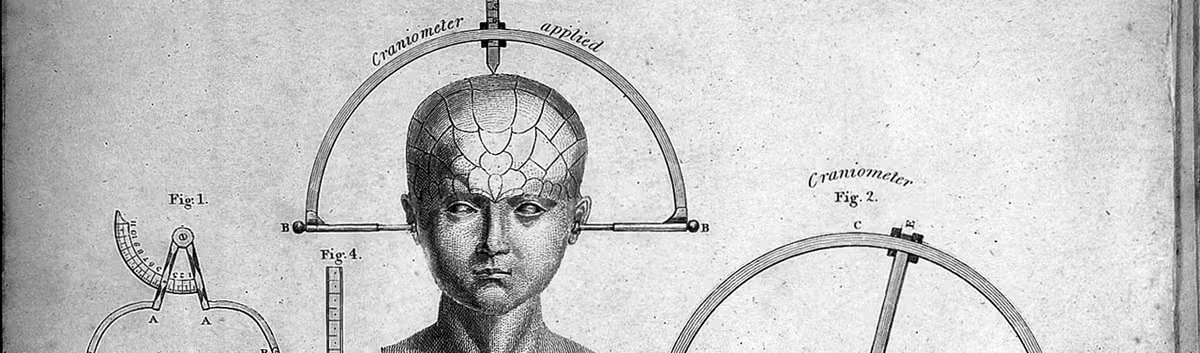
Many core methods in psychology statistics—regression, correlation, chi-square tests, and significance testing—came from figures such as Galton, Pearson, and Fisher. These tools still shape research and clinical work today.
Ethics in psychology statistics require us to name an uncomfortable truth. These same figures also supported eugenics. Their work grew out of an ideology that ranked human worth and sought to control who could reproduce.
Eugenics aimed to “improve” the population. In practice, it justified racial hierarchy, segregation, forced sterilization, and policies that enabled mass harm, including genocide.
When we ignore this context, we weaken ethical responsibility. Awareness strengthens science. Avoidance does not.
A Metaphor for Ethical Awareness
To help students understand ethics in psychology statistics, I share a metaphor.
Imagine steering people through a storm. Midway through the journey, you learn that your compass once guided ships used in the transatlantic slave trade.
I would not throw the compass overboard. I still need to get people home.
Instead, I would hold it differently.
I would hold it with awareness. Tools carry history. Ethics in psychology statistics ask us to recognize that history and choose how we act now.
Using Statistical Tools Responsibly
Ethical practice does not mean abandoning statistics. Instead, ethics in psychology statistics call for careful, informed use.
This is the stance I want students to take. Use the tools. Do good work. Hold the discomfort honestly. Ethical science does not come from pretending our methods are pure. It comes from responsibility, reflection, and choice.
For readers who want to explore this history further, Aubrey Clayton’s essay How Eugenics Shaped Statistics is available through Nautilus:
https://nautil.us/how-eugenics-shaped-statistics-238014/
As a psychologist working with students, clinicians, and families across Altadena, South Pasadena, La Cañada Flintridge, and San Marino, I see how ethical reflection strengthens research and clinical care. This awareness matters when working with people affected by anxiety, depression, ADHD, OCD, PTSD, self-harm, and systemic harm.
If you’re interested in therapy, consultation, or training grounded in ethical, evidence-based practice, you can learn more about our work or reach out through our contact page to connect with Youth & Family Institute.