
Primary and Secondary Emotions in Everyday Life
Primary emotion: sadness.
Secondary emotion: anger or anxiety quickly takes over.
If this pattern feels familiar, you’re not alone. It’s one of the most common emotional sequences I see in therapy—and one of the most important targets in DBT. Understanding primary and secondary emotions can completely change how people relate to what they feel.
What Are Primary Emotions?
Primary emotions are our first, most direct responses to an experience. They tend to be vulnerable and honest. For example, sadness after a loss, fear after a close call, or hurt after rejection often show up first.
However, these emotions can feel uncomfortable or unsafe. Because of that, many people move away from them quickly.
How Secondary Emotions Take Over
Secondary emotions usually arrive fast. Anger may step in to protect sadness. Anxiety may rise to avoid grief. Shame may cover hurt. While these reactions make sense, they often create more distress over time.
As a result, people may feel flooded, reactive, or unsure about what they’re actually feeling. Emotional regulation becomes harder because the original emotion gets buried.
Why Naming the Primary Emotion Helps
In DBT, working with primary and secondary emotions often starts by slowing down. Instead of reacting right away, we pause and ask a few key questions:
-
What did I feel first?
-
What emotion showed up next?
-
What does the primary emotion need right now?
Importantly, this process isn’t about getting rid of emotions. Instead, it’s about understanding them. When someone acknowledges the primary emotion, the nervous system often settles. Over time, secondary anger or anxiety tends to soften.
Primary Emotions and Emotional Regulation
Emotional regulation doesn’t begin with control. Rather, it begins with clarity. When people recognize what they feel—and why—they can respond more effectively.
That’s why primary and secondary emotions matter so much in therapy, teaching, and relationships. Once the primary emotion is seen and validated, change becomes possible.
Clinical Training and Community
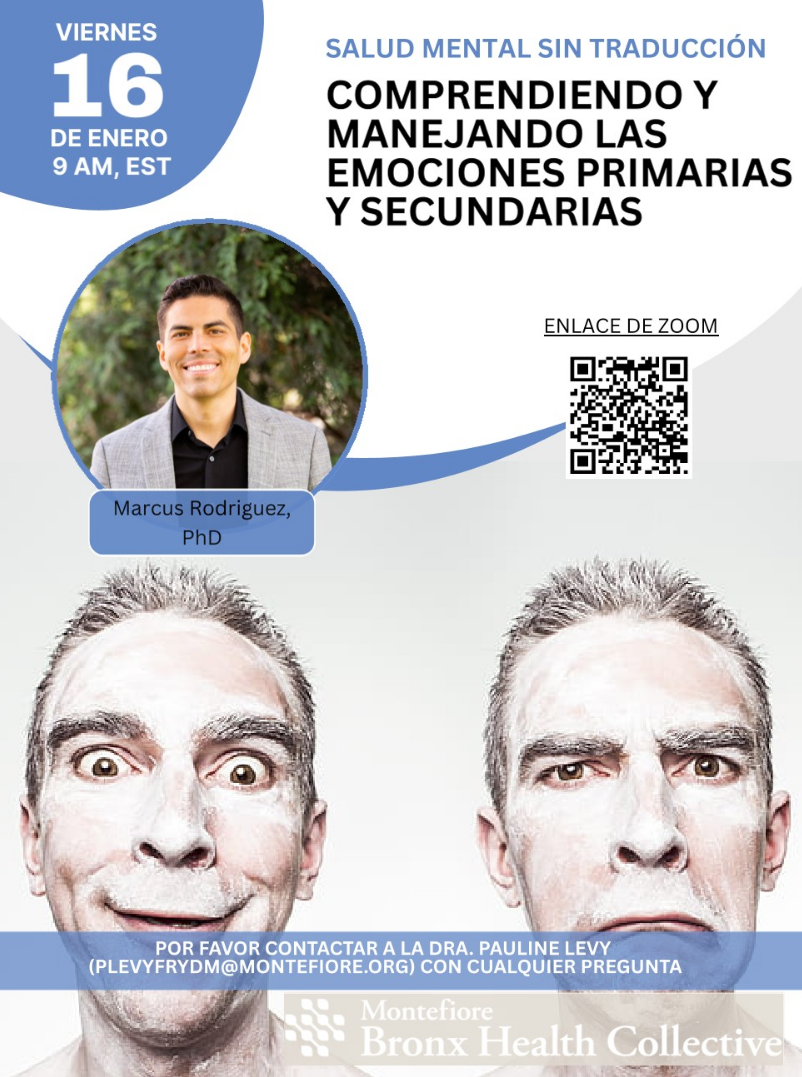
I shared this framework during a free virtual didactic for Spanish-speaking clinicians through Montefiore Health System, organized by Pauline Levy, Psy.D. I’m grateful for opportunities to support accessible, culturally responsive clinical education, especially spaces where we can talk openly about emotional regulation en Español.
Honrado de ser parte de esta comunidad.
Nos vemos pronto ❤️
Clinical Perspective
As a psychologist working with children, teens, and adults across Altadena, South Pasadena, La Cañada Flintridge, and Pasadena, I regularly see how primary and secondary emotions intersect with anxiety, depression, ADHD, OCD, PTSD, self-harm, and suicide risk. When people learn to identify their primary emotion and respond with care, emotional regulation becomes far more achievable.
If you’d like support using DBT-informed approaches to emotional regulation, you can reach out through our contact page (/contact/). For more information about Montefiore Health System’s educational offerings, visit https://www.montefiore.org.