
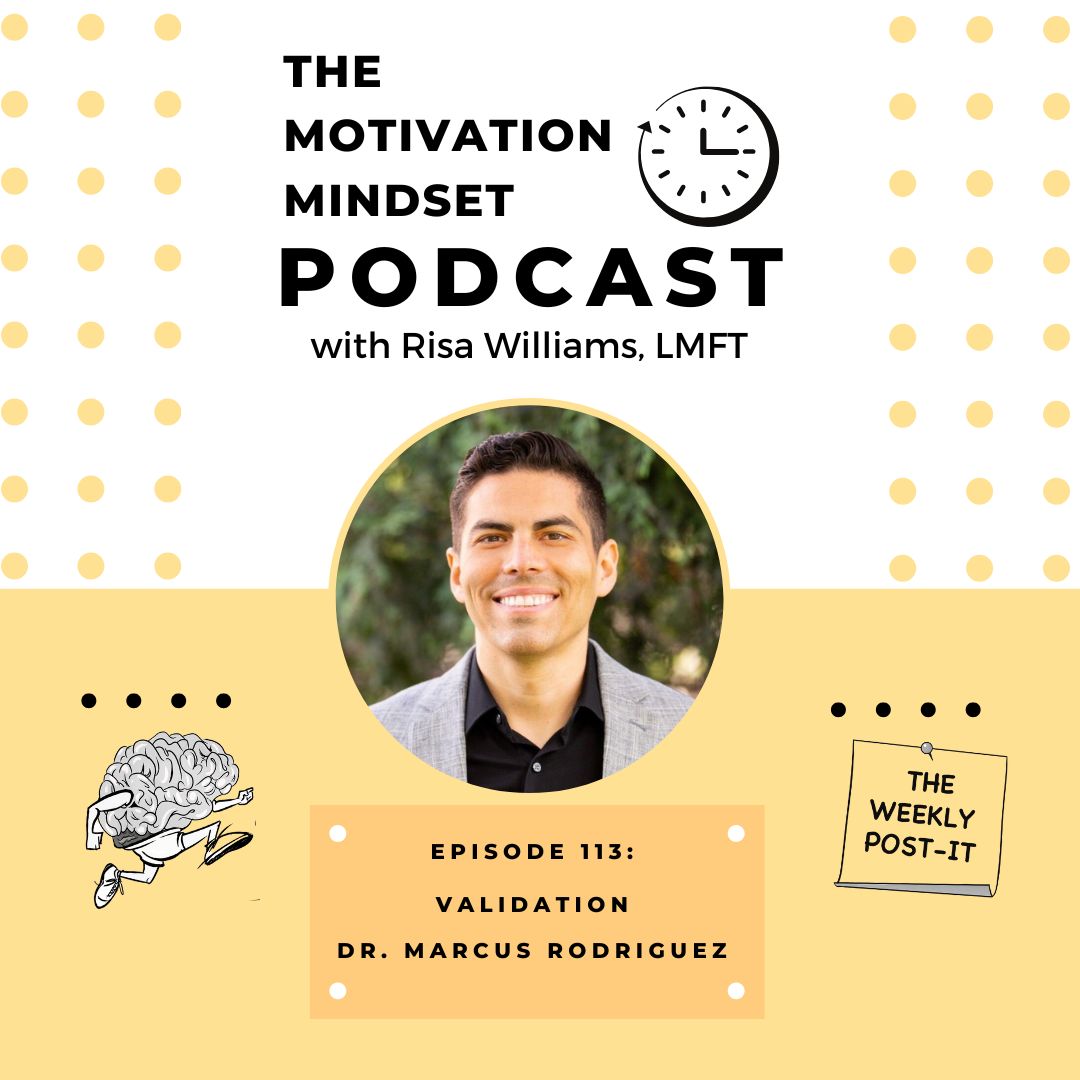
I’m deeply grateful to Risa Williams for the invitation and for such a thoughtful, grounded conversation.
We spent our time together exploring what validation really is—and why it may be the most effective, and sometimes the only, way to directly help another person regulate their emotions.
Validation is often misunderstood. It doesn’t mean agreement. It doesn’t mean approval. And it doesn’t mean minimizing harm or avoiding accountability. At its core, validation is about communicating that someone’s internal experience makes sense given their history, context, and emotional state.
From a DBT and clinical psychology perspective, validation plays a central role in emotional regulation. When people feel accurately seen and understood, their nervous system can begin to settle. When emotions are acknowledged rather than dismissed, intensity decreases. Regulation follows connection.
This is true in therapy, in parenting, in teaching, and in close relationships. Before problem-solving can happen—before skills can land—validation has to come first. Without it, even the best strategies often fail to reach the person who needs them most.
In our conversation, we talked about how validation supports emotional regulation not by fixing emotions, but by allowing them to move through the system safely. Being validated reduces shame, lowers defensiveness, and creates the conditions for change.
It’s one of the reasons validation is a cornerstone of Dialectical Behavior Therapy. Skills matter, but without a validating environment, skills alone rarely stick.
If you’re interested in learning more, you can listen to the full conversation here:
🎧 https://lnkd.in/gsBPmwxQ
As a psychologist working with children, teens, and adults across Santa Monica, Brentwood, Beverly Hills, and Pacific Palisades, I regularly see how validation directly impacts anxiety, depression, ADHD, OCD, PTSD, self-harm, and emotional dysregulation. When people feel understood, they are far more able to access coping skills and build lasting change.
If you’re looking for therapy that integrates evidence-based approaches like DBT with a strong emphasis on validation and emotional regulation, you can learn more about our work or reach out through our contact page to connect with Youth & Family Institute. For additional clinical perspective, the American Psychological Association offers extensive research on emotional regulation and therapeutic relationships.