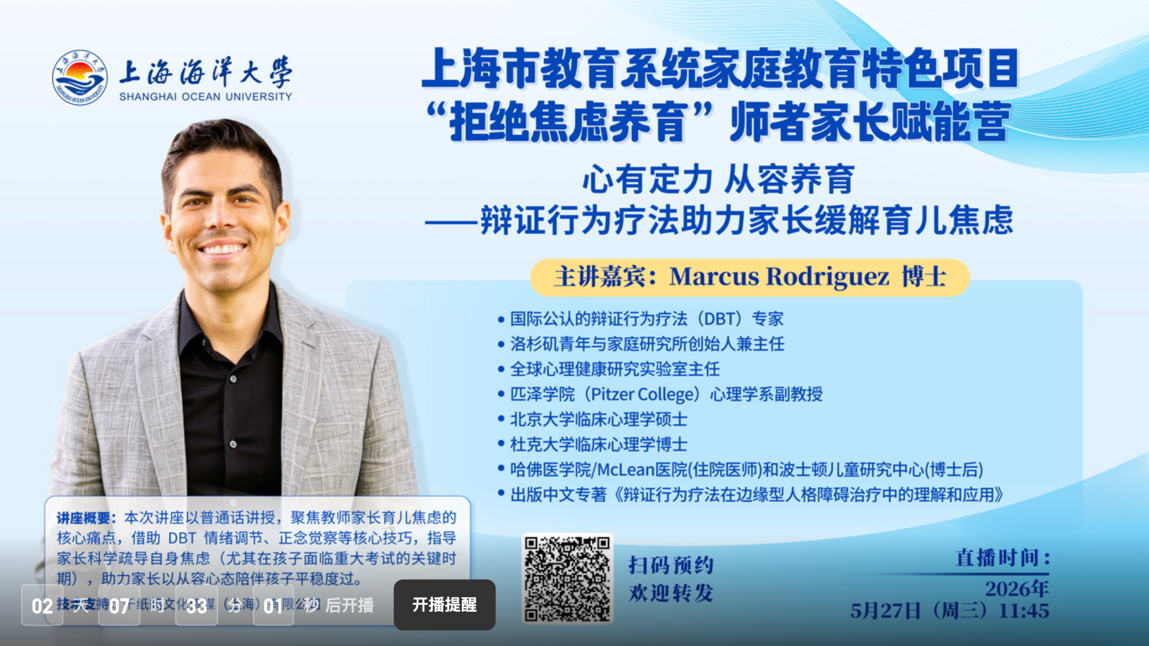
anaging anxiety during high-stakes exams can be overwhelming for students, parents, and educators—especially when one test may shape a young person’s next academic step. Tonight, I’m teaching a free Mandarin-language webinar for educators and parents hosted by Shanghai Ocean University.
The topic is timely and important: practical strategies for managing anxiety during China’s high-stakes exams, specifically the Zhongkao and Gaokao.
These multi-day exams are part of China’s testing system, where the result can determine whether and where a student attends high school or college. In many cases, the outcome is based almost entirely on one exam—not GPA, essays, recommendations, interviews, or extracurriculars. Just one exam.
For students, parents, and teachers, that level of pressure can feel overwhelming.
Why High-Stakes Exams Create So Much Anxiety
Test anxiety is not simply “being nervous.” It can affect a student’s thoughts, body, emotions, and behavior.
Students may experience:
- Racing thoughts or panic
- Trouble sleeping
- Irritability or shutdown
- Avoidance or procrastination
- Physical symptoms like stomachaches or headaches
- Fear of disappointing family members
- A sense that their entire future depends on one performance
When anxiety becomes intense, students often need more than encouragement. They need practical tools for calming the nervous system, staying present, and taking the next effective step.
DBT Skills for Managing Anxiety During High-Stakes Exams
Dialectical Behavior Therapy, or DBT, offers skills that can help students and families navigate high-pressure moments with more steadiness. To learn more about YFI’s DBT approach, visit our DBT services page: https://youthandfamilyinstitute.com/dbt/
Helpful DBT-informed strategies may include:
- Mindfulness: noticing anxious thoughts without getting completely swept away by them
- Distress tolerance: using short-term coping tools when anxiety spikes
- Emotion regulation: protecting sleep, food, movement, and routines during stressful periods
- Wise mind: making decisions from both emotion and reason
- Validation: helping students feel understood without adding more pressure
For parents, validation can be especially powerful. A supportive response might sound like: “It makes sense that you feel stressed. This exam matters to you. Let’s focus on what you can do next.”
Supporting the Student, Not Just the Score
When a single exam feels like it determines everything, students can start to believe their worth depends on the result. Families and educators can help by reminding students that performance matters, but it is not the full measure of who they are.
For additional context on student mental health and test stress, the American Psychological Association offers helpful information on how stress affects children and teens: https://www.apa.org/topics/stress/children
At YFI, we support children, teens, young adults, and families navigating anxiety, depression, OCD, PTSD, self-harm, suicide risk, ADHD, and high-pressure academic or family stress. Our team provides comprehensive DBT, including individual therapy, skills training, phone coaching, parent coaching, and coordinated care for clients who need more support.
For families and clinicians in San Marino, South Pasadena, La Cañada Flintridge, Altadena, Beverly Hills, and Santa Monica, YFI offers compassionate, evidence-based care for youth and families. To learn more or connect with our team, please visit our contact page: https://youthandfamilyinstitute.com/contact/