When clients aren’t ready for change, we can feel stuck, discouraged, or burned out—not because we do not care, but because we may feel ineffective. We can see what might help. We may have skills, strategies, and treatment plans ready. But the client may not yet be ready to get on board with our plan.
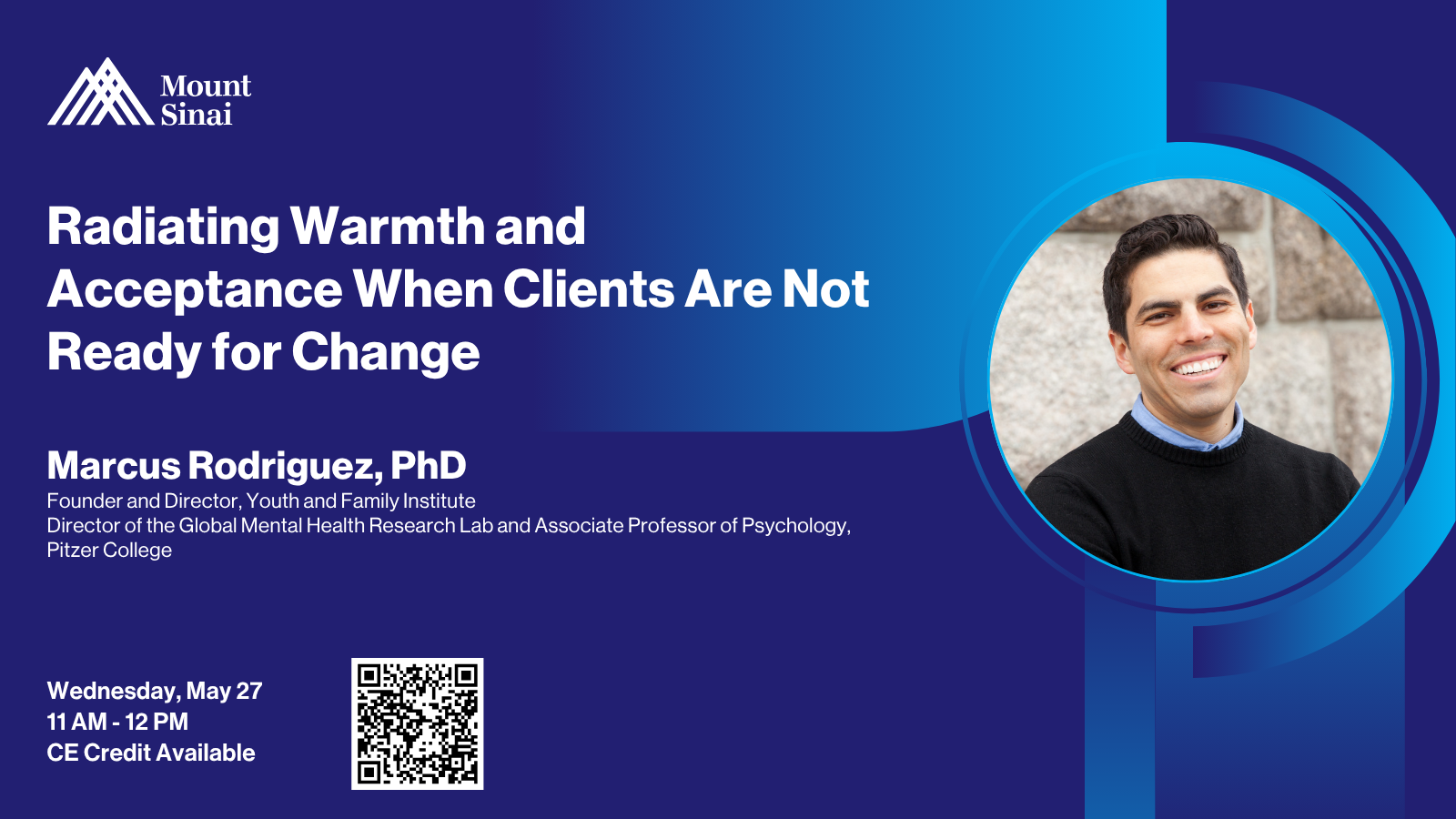
I’m presenting a free lecture hosted by the Icahn School of Medicine at Mount Sinai on this exact challenge: “Radiating Warmth and Acceptance When Clients Are Not Ready for Change.”
This talk focuses on what is actually within our control as clinicians: offering support, matching interventions to readiness, and providing emotionally corrective experiences when clients are not ready for change.
Why Clients Aren’t Ready for Change
Ambivalence is a common part of therapy. A client may want relief from suffering while also feeling afraid, overwhelmed, ashamed, or unsure about what change will require.
For clinicians, this can be emotionally difficult. We may notice ourselves wanting to push harder, explain more, rescue the client, or withdraw out of frustration. These reactions make sense, especially when the client is struggling with high-risk behaviors, intense emotions, or patterns that repeatedly create pain.
But when clients feel stuck, they often need more than a better argument for change. They need warmth, validation, structure, and interventions that match their actual readiness.
Radiating Warmth When Clients Feel Stuck
Warmth does not mean passivity. It does not mean avoiding hard conversations or lowering clinical expectations. In evidence-based treatment, warmth is an active therapeutic stance.
It communicates: “I see you. I understand this is hard. I am not giving up on you.”
In DBT and other behavioral treatments, we work to balance acceptance and change. We validate the emotional logic of a client’s behavior while still helping them move toward more effective choices.
Helpful clinical questions may include:
- What function does this behavior serve?
- What fears or losses might change bring up?
- What skills are missing or hard to access?
- What level of readiness is the client actually showing?
- How can I preserve connection while still targeting change?
Matching Interventions When Clients Aren’t Ready for Change
When clients are not ready for change, the goal is not to force readiness. The goal is to understand where the client is and respond effectively.
Sometimes that means slowing down. Sometimes it means focusing on validation, commitment, motivation, or the therapeutic relationship before moving into more direct behavior change. Sometimes it means helping the client experience the relationship itself as safer, steadier, and more emotionally corrective than what they have known before.
For clinicians, this work requires patience and support. Consultation, supervision, and team-based care can help us stay grounded, flexible, and compassionate when treatment feels stuck.
Clinicians interested in the Mount Sinai lecture can register through the Mount Sinai Grand Rounds registration link: https://lnkd.in/gdvq7Abw
At YFI, we support youth, young adults, and families navigating anxiety, depression, OCD, PTSD, self-harm, suicide risk, ADHD, emotion dysregulation, and relationship challenges. Our team provides comprehensive DBT, including individual therapy, skills training, phone coaching, parent coaching, and coordinated care for clients who need more support. Learn more about our DBT services: https://youthandfamilyinstitute.com/dbt/
For families and providers in Brentwood, Pacific Palisades, Malibu, Beverly Glen, Bel Air Estates, and Santa Monica, YFI offers evidence-based treatment rooted in warmth, structure, and respect. To connect with our team or make a referral, please visit our contact page: https://youthandfamilyinstitute.com/contact/