Prison education can change more than one person’s life. It can affect families, children, communities, and the way people imagine their futures.
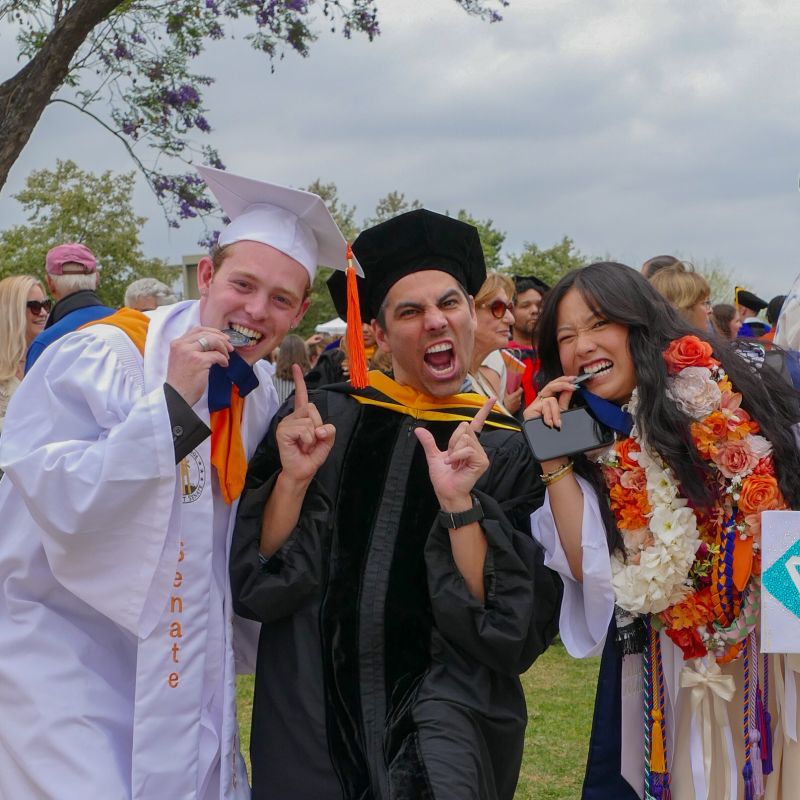
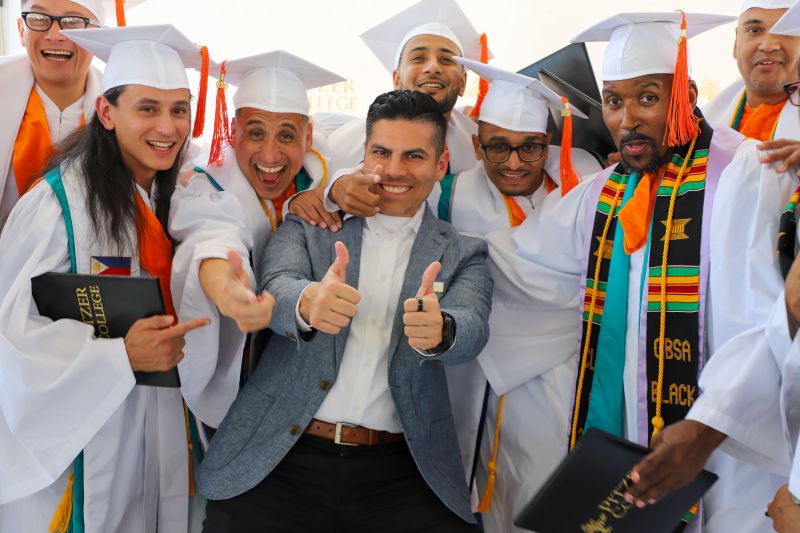
Six months ago, I shared that I had taught my last class at Norco prison. My heart felt heavy that day. Last month, I got to return one last time to celebrate Pitzer College’s Inside-Out graduation ceremony.
The California Rehabilitation Center in Norco is closing. On one hand, I feel relief. A prison closure can reflect a shrinking incarcerated population. On the other hand, I feel sad because this particular prison is the one shutting down.
The program Pitzer College built there has been extraordinary. It included a full and free bachelor’s degree pathway for cohorts of incarcerated men.
Prison Education at Pitzer College
Over eight years, I taught seven semester-long college courses at Norco prison.
These men taught me as much as I taught them about resilience, hope, and radical acceptance. Some have become friends I will keep for life.
Pitzer College’s Inside-Out Pathway-to-BA program created something rare and meaningful. It brought education into a correctional setting and treated incarcerated learners as students with futures, families, strengths, and responsibilities.
To learn more about Pitzer College’s Inside-Out Pathway-to-BA program, visit: https://www.pitzer.edu/inside-out-pathway-ba
Why Prison Education Matters for Families
One of my students once told me his father and grandfather both went to prison.
Now, he is determined to break that cycle for his children.
That is what prison education and a college degree can mean for many of these men and their families. It is not only about one class, one diploma, or one ceremony. Instead, it is also about identity, hope, and the possibility of becoming a different kind of father.
Education can help a person imagine a future that is not only defined by incarceration.
For some students, that future includes their children watching them walk across a graduation stage. For others, it includes returning to their families with a deeper sense of purpose and responsibility.
Father’s Day and the Meaning of Graduation
This graduation felt especially meaningful around Father’s Day.
Many incarcerated students are also fathers, sons, brothers, partners, and community members. Because of that, their education affects more than their own lives.
When a father builds a different path, children feel that. Families feel that too. Eventually, communities can feel it as well.
I am grateful to have played a small part in their journey.
Resilience, Hope, and Radical Acceptance
Teaching at Norco changed me.
It deepened my respect for resilience. It also challenged my assumptions about hope. Most of all, it reminded me that radical acceptance is not passive.
Radical acceptance means facing reality as it is, without pretending it is fair or easy. In this setting, that meant holding many truths at once.
The facility is closing, and that matters.
At the same time, the program built there was extraordinary. That matters too.
The students who graduated worked hard for something meaningful. Therefore, their achievement deserves to be honored.
Happy Father’s Day.
At YFI, we support youth, young adults, adults, and families navigating anxiety, depression, OCD, PTSD, self-harm, suicide risk, ADHD, emotion dysregulation, grief, family stress, and major life transitions. Our team provides comprehensive DBT, parent coaching, skills training, phone coaching, and coordinated care for clients and families who need more support. Learn more about our DBT services here: https://youthandfamilyinstitute.com/dbt/
For families and clinicians in South Pasadena, La Cañada Flintridge, San Marino, Altadena, Beverly Hills, Brentwood, Sawtelle, Santa Monica, Mar Vista, and Venice, YFI provides evidence-based care with warmth, clarity, and respect. To learn more or connect with our team, please visit our contact page: https://youthandfamilyinstitute.com/contact/