Teen boys mental health care often gets framed around resistance, shutdown, aggression, or lack of motivation.
At YFI, we try to see it differently.
Nearly half of the clinicians on our team are men. Over time, we have noticed that teenage boys and young men struggling with self-harm, suicidal thoughts, aggression, and impulsivity often stick with us.
These are often the clients who have bounced from provider to provider.
They may have been labeled difficult, resistant, oppositional, guarded, or unwilling to engage. However, many of them are not resistant to treatment.
They may just need the right fit.
Teen Boys Mental Health
Teenage boys are often navigating autonomy, identity, power, vulnerability, shame, anger, and connection all at once.
Questioning authority can be developmentally appropriate. Fighting for autonomy can make sense. Wanting to be respected, taken seriously, and not talked down to matters.
If therapy does not address what actually matters to them, they may check out.
That does not mean they cannot benefit from therapy. It means the approach has to meet them where they are.
For many teen boys and young men, treatment works better when it is practical, direct, relational, and skill-based.
Why Representation Matters
After reflecting on this, I started to worry that people might read it as reinforcing the idea that male clients need male therapists.
That is not what I believe.
That framing would essentialize gender. It could also suggest that women cannot understand male adolescent struggles, which is not true.
I discussed this with Kaylene Yee, a former student who studied gender and women’s studies. She said, “Patriarchy hurts everyone, including men. One way is by convincing men, and the broader population, that masculinity and vulnerability are incompatible.”
That landed.
Representation matters. When a teenage boy sees a man he respects talk about emotions without flinching, it can increase his willingness to try doing the same.
However, correlation is not causation.
Male clinicians are not the reason boys stick with us.
Our DBT team works hard to understand our clients and meet them where they are. That would still be true if we had no men on our team.
DBT for Self-Harm, Impulsivity, and Emotion Dysregulation
Dialectical Behavior Therapy can be especially helpful for teens and young adults who struggle with intense emotions, impulsive behavior, self-harm, suicidal thoughts, aggression, or relationship conflict.
DBT is not about blaming clients for their behavior.
It is about helping them build skills that work.
That can include learning how to slow down, tolerate distress, regulate emotions, communicate more effectively, repair relationships, and make safer choices when emotions are high.
For teen boys and young men, that often means building a treatment relationship that can hold both autonomy and accountability.
They need to feel respected.
They also need skills.
The Right Fit Can Change Engagement
When clients have been told they are “treatment resistant,” they may come into therapy already expecting another provider to give up on them.
That history matters.
A strong therapeutic fit does not mean therapy is easy. It means the client feels understood enough to stay in the work.
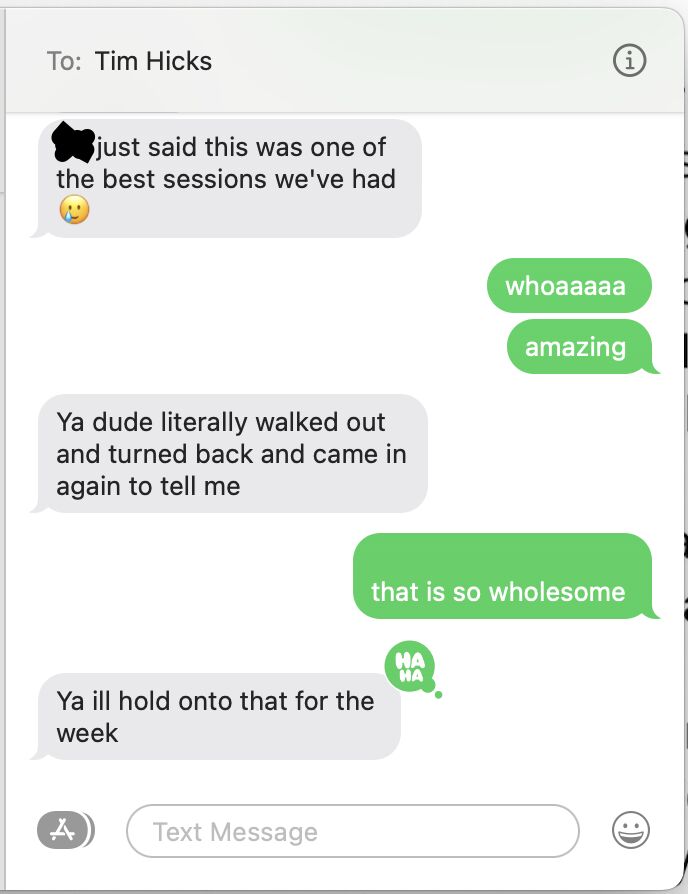
This reflection came up again after Tim Hicks, one of our YFI clinicians, sent a text after session about connecting with a client who had struggled to stay engaged in treatment.
It was a small moment, but it captured something important: the right fit can change whether a young person feels understood enough to keep showing up.
Effective teen boys mental health care is not about forcing vulnerability. It is about building trust, respecting autonomy, and teaching skills that actually matter to the client.
Teen boys and young men are not hopeless.
They are not unreachable.
They may just need care that understands development, autonomy, vulnerability, and skill-building at the same time.
The National Institute of Mental Health offers resources on men and mental health here: https://www.nimh.nih.gov/health/topics/men-and-mental-health
Happy last day of Men’s Mental Health Month.
At YFI, we support youth, young adults, adults, and families navigating self-harm, suicidal thoughts, aggression, impulsivity, anxiety, depression, ADHD, emotion dysregulation, family conflict, and difficulty using skills consistently. Our team provides comprehensive DBT, parent coaching, skills training, phone coaching, and coordinated care when clients and families need more support. Learn more about our DBT services in Los Angeles here: https://youthandfamilyinstitute.com/dbt-therapy-los-angeles/
For families in West LA and Pasadena, YFI provides evidence-based care with warmth, clarity, and respect. To learn more or connect with our team, please visit our contact page: https://youthandfamilyinstitute.com/contact-us/